

The Price of Pain: Nine in ten Australian workers in pain push on, with half unable to afford time off
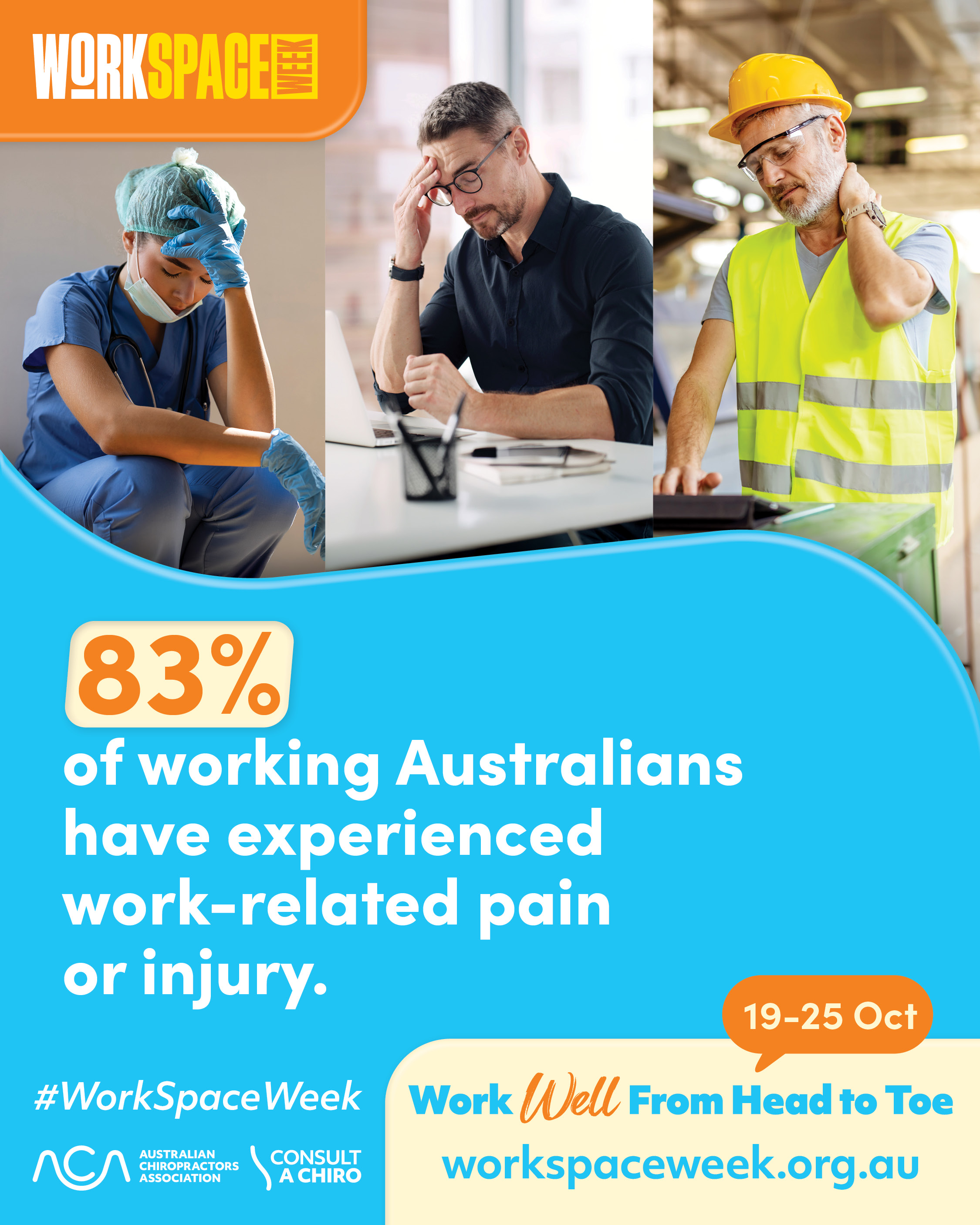
83% of working Australian's have experienced a WMSD
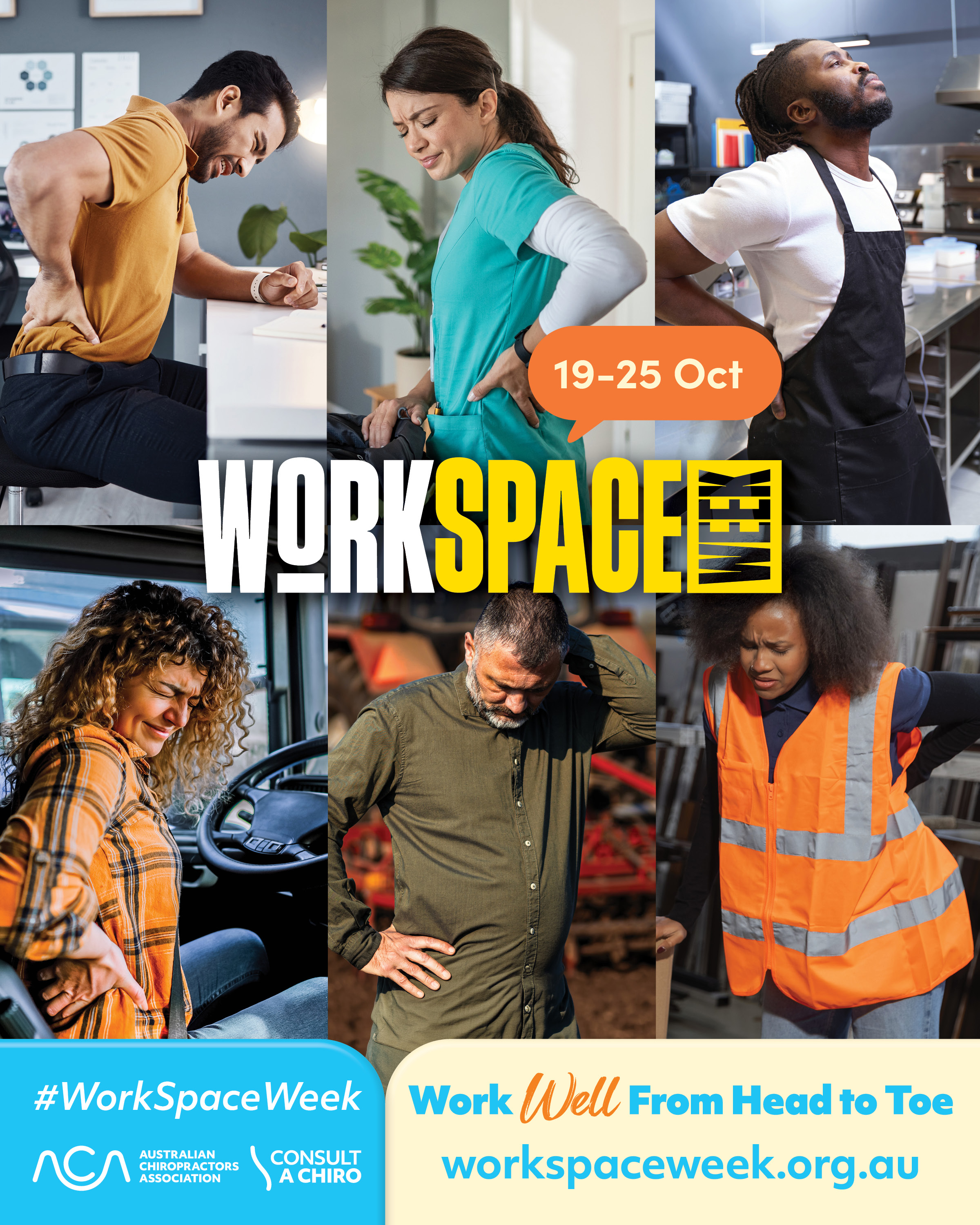
Cost-of-living and job security fears are pushing Australians to work through pain instead of resting, recovering or seeking treatment, new data reveals.
Almost half (49%) of those who worked through pain said they couldn't afford to lose income, rising to 54% of women. The cost of living has also prevented 45% of working pain sufferers from taking time off to recover from an injury, while 42% reported delaying or avoiding medical treatment due to financial pressures.
The 2026 Impact of Work-related Musculoskeletal Disorders or Injuries on Australian Workers national survey of 1,056 Australians, commissioned by the Australian Chiropractors Association (ACA) and conducted by independent research firm Pureprofile, found that three-in-four Australians (76%) who’ve worked at some point in their lives (current workers, retirees and those on leave) have experienced a work-related musculoskeletal disorder (WMSD) or injury.
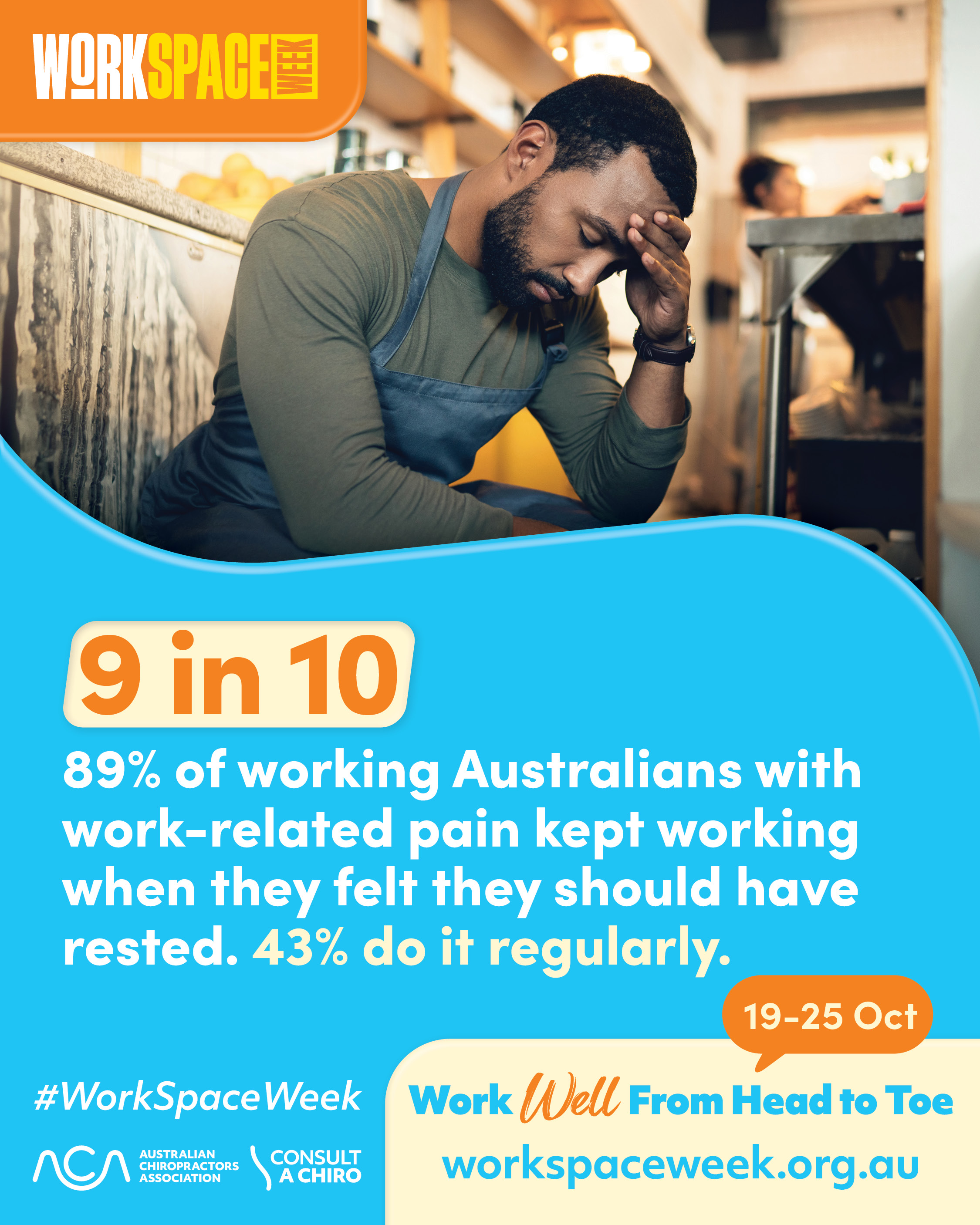
Among respondents currently working, this rises to 83%. Alarmingly, 43% of pain sufferers currently working continue to work regularly with pain despite feeling that they should rest or take time off, rising to 50% of women compared to 37% of men, while many (40%) people with work-related pain never disclosed their pain or injury to their employer.
Job security was high on the list of concerns of those continuing to work despite being in pain (43%), rising to 50% among 18-to-30-year-old workers. Regional respondents were more likely than metro respondents to experience work-related pain regularly (46% vs 36%) and were less likely to take time off (41% vs 54%); while 31% of people experiencing work-related pain have never sought a diagnosis or treatment and 65% have at least one untreated condition.
The survey identified that work-related back pain is becoming chronic, with the back pain experienced by 44% of workers lasting longer than three months compared to just 21% who said their back pain had completely resolved.
ACA President Dr Billy Chow said, “The survey results show work-related pain has become an accepted part of working life for most Australians, with too many continuing to work rather than modify behaviour or seek early diagnosis and effective treatment.
“When people with a work-related injury continue working, a short-term problem can develop into a chronic condition that poses real long-term consequences for workers, their families, employers and the Australian economy,” he said.
83% of people surveyed whose job involves computer or desk work have experienced work-related pain, just below those who lift (88%) or push and pull (91%), while clinical healthcare workers are hardest hit with work-related pain at 93%.
The survey also identified the impact WMSDs or injuries have on productivity, with 55% of current workers surveyed reporting that they had to take time off work, which impacted them, their families and employers.
Safe Work Australia (2026) reports that musculoskeletal injuries and diseases account for the majority (53%) of serious workers’ compensation claims, and these can develop into chronic conditions posing serious long-term implications for workers, their families, their employers’ bottom line and the economy.
“WMSDs can reduce workers’ productivity and quality of life while increasing psychological distress, bodily pain and disability, so it’s essential for employers to implement preventative measures and interventions. With over 400 serious workers' compensation claims lodged daily, we must prioritise workplace safety controls, regular risk assessments and early intervention to help prevent the long-term impacts on health, wellbeing and productivity,” Dr Chow said.
WMSDs are a range of inflammatory and degenerative conditions affecting the muscles, tendons, ligaments, joints, peripheral nerves and supporting blood vessels. They can be caused by a single workplace event but commonly result from repeated harmful activities over an extended period.
According to Safe Work Australia’s Key Work Health and Safety Statistics (October 2026), body stressing is the most common mechanism of injury across every major occupation group, accounting for 51,800 (35.2%) serious claims, followed by falls, slips and trips (32,700 or 22.2%).
Now in its fifth year, WorkSpace Week is held during National Safe Work Month and aligns with the Australian Work Health and Safety Strategy 2023–2033.
WMSD risks include poorly executed lifting, pushing, pulling and bending, repetitive movements, poor posture, prolonged driving and non-ergonomic computer use. Mental stress can also trigger tension and cervicogenic (neck-related) headaches that affect workers’ concentration, productivity and wellbeing.
Work-related pain is also taking a psychological toll, with 72% of sufferers reporting an impact on their mental health and wellbeing, rising to 82% of 18-to-30-year-olds.
“Without early intervention, the relationship between pain and mental health can become a vicious cycle, worsening both conditions and affecting workers, their families and employers,” Dr Chow said.
“Of concern, 52% of workers surveyed said they’re too busy to take movement or stretching breaks. Only 11% are very confident they know how to reduce their risk, and among workers who are not confident, 92% have experienced work-related pain compared with 73% of those who are very confident.”
New figures from the Australian Institute of Health and Welfare show health spending on musculoskeletal disorders (MSDs) reached $17.5 billion in 2024–25, up $1.2 billion in a year, making MSDs Australia's third most costly disease group behind cancer ($21.7B) and cardiovascular diseases ($18.4B). Deloitte Access Economics estimates the total economic cost exceeds $55.1 billion a year.
“With serious workers’ compensation claims for traumatic joint, ligament, muscle and tendon injuries, and musculoskeletal and connective tissue diseases increasing by 28.7% over the past eight years, prevention and early intervention provide the best protection. We’re urging employers and workers to join the WorkSpace Week movement by reviewing workplace safety controls, managing modifiable risks and encouraging early diagnosis and treatment to help prevent chronic conditions,” Dr Chow said.
Interventions can include improving posture; regular exercise, movement breaks, stretching and strengthening; ergonomic workstations; task-specific and equipment changes; manual handling training; and balancing work hours and workloads to minimise mental stress.
Employers and workers can download free resources including the checklists, exercise posters, factsheets and podcasts at workspaceweek.org.au to help Australians Work Well From Head to Toe.
Access Media-Centre
Alice Collins
Insight Communications
aca@insightcommunications.net.au
Visit us on social media:
LinkedIn
Instagram
Facebook
YouTube
X
WorkSpace Week - Work Well From Head To Toe
Legal Disclaimer:
EIN Presswire provides this news content "as is" without warranty of any kind. We do not accept any responsibility or liability for the accuracy, content, images, videos, licenses, completeness, legality, or reliability of the information contained in this article. If you have any complaints or copyright issues related to this article, kindly contact the author above.
