

Landmark Peer-Reviewed Study Validates New Knee Brace Technology for Most Common Knee Condition
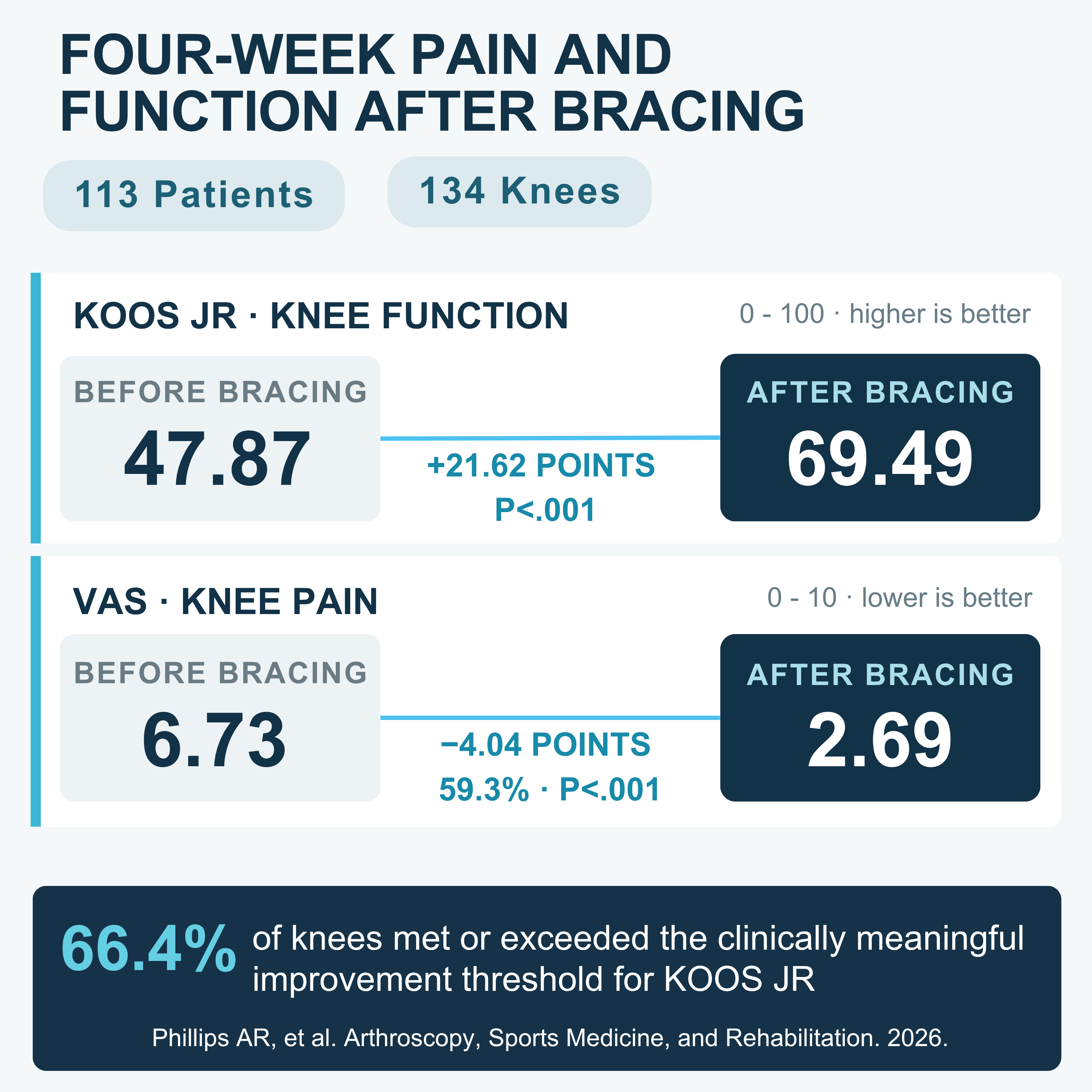
Patient-reported pain and function improved significantly after four weeks of Ascender brace use. Average KOOS JR scores increased from 47.87 to 69.49, while VAS pain scores decreased from 6.73 to 2.69.
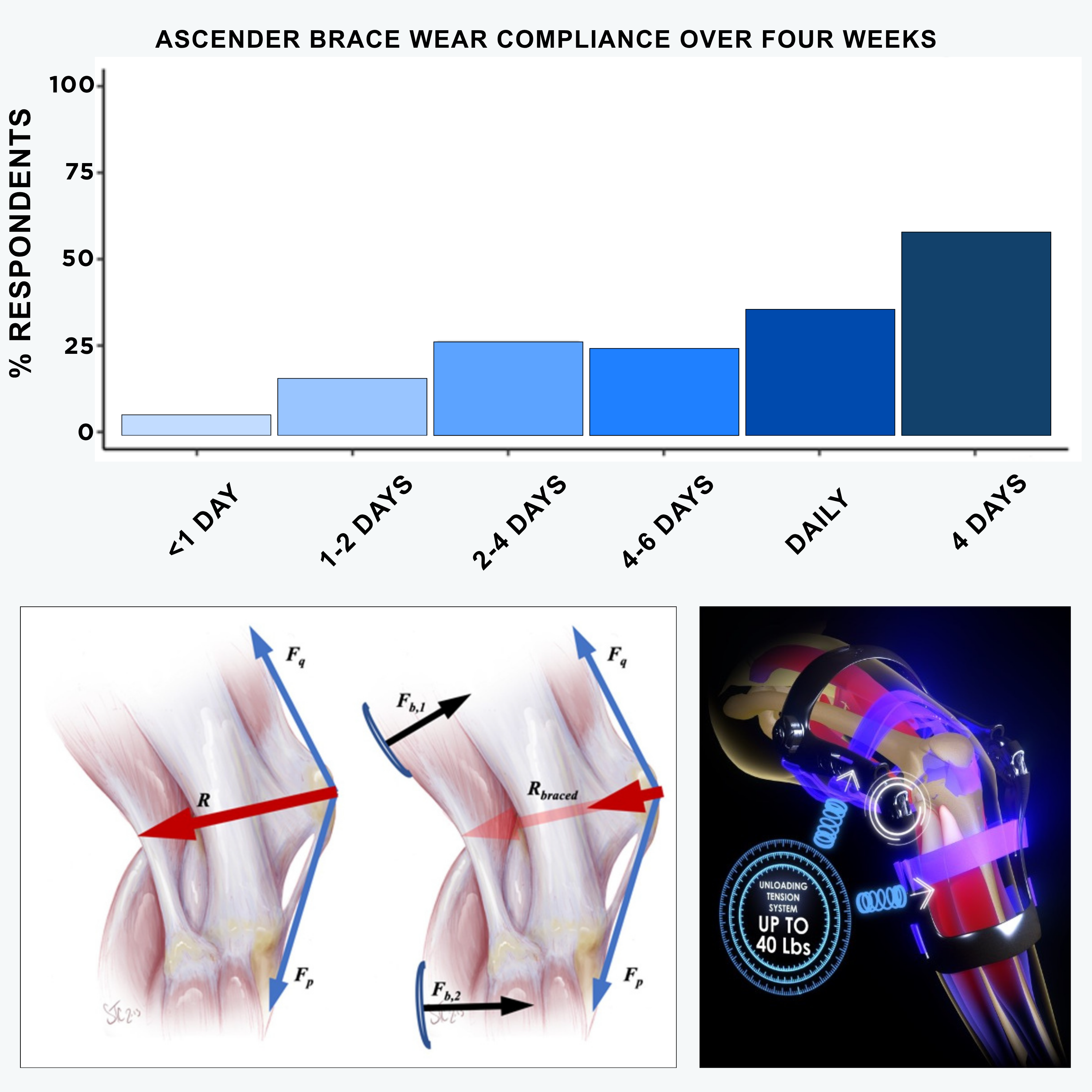
Patient-reported Ascender brace wear frequency during the four-week study. Among 109 respondents, 56.9% wore the brace at least four days per week, including 33.9% who reported daily use.
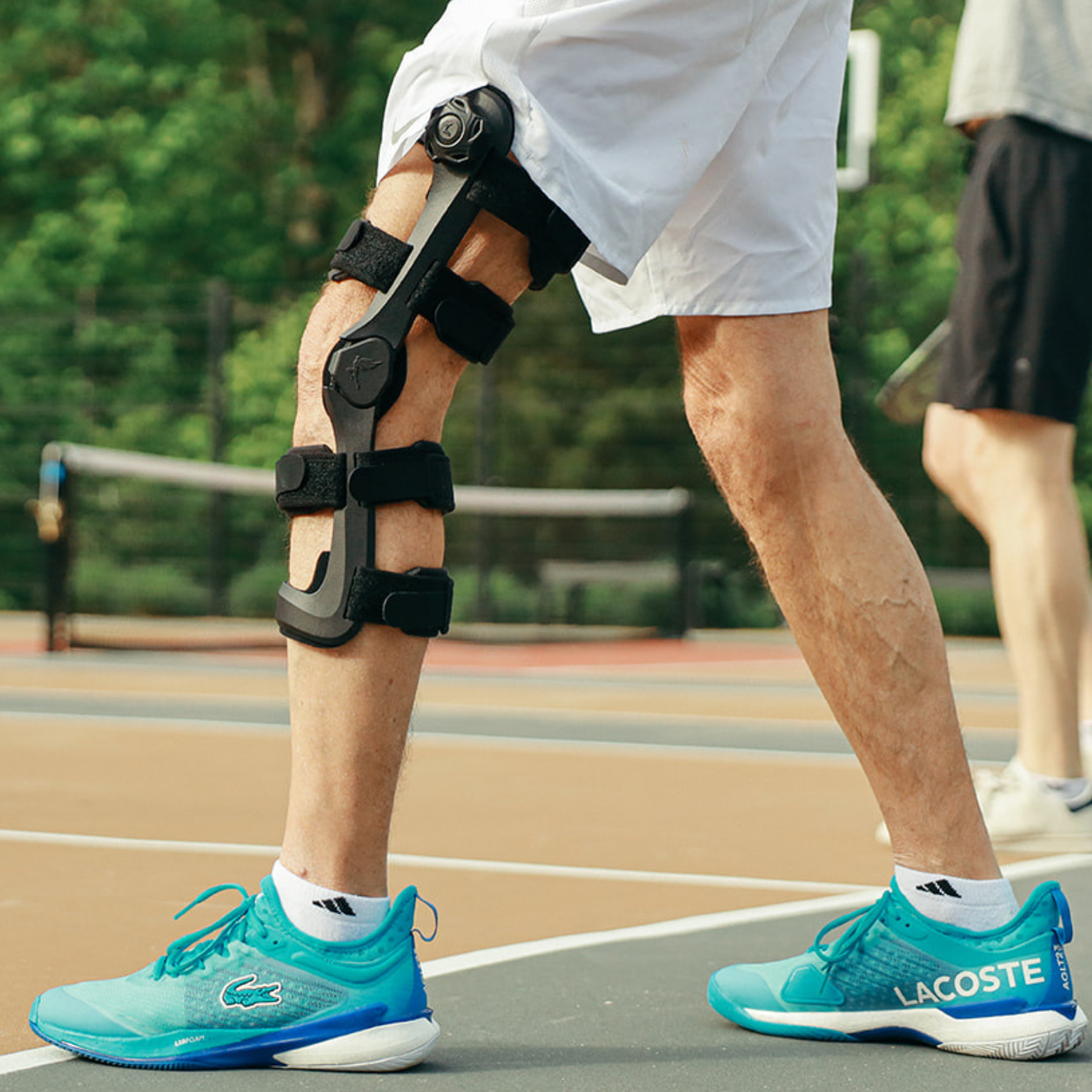
The custom-fit Icarus Ascender Unloader Knee Brace provides dynamic knee unloading and support during activities such as pickleball.
Seminal study of 134 knees shows 59% pain reduction with the Icarus Ascender Knee Brace, providing new evidence that may reshape care for anterior knee pain.
“This publication is an important step in building the clinical evidence behind anterior knee unloading,” said Dave Johnson, Founder and CEO of Icarus Medical. “It also helps clinicians better understand which patients may benefit most and how consistent brace use may influence outcomes.”
Published in Arthroscopy, Sports Medicine, and Rehabilitation, the study evaluated 113 patients representing 134 knees. The study population had a mean age of 53.5 years and was 56.6% male and 43.4% female. Twenty-one patients, or 18.6% of the study population, were treated bilaterally. Participants were instructed to wear the Ascender during daily activities, and outcomes were assessed before and after the four-week bracing period using validated patient-reported outcome measures.
The study was conducted by investigators affiliated with Rush University Medical Center, Scripps Clinic, Yale School of Medicine, Brigham and Women’s Hospital, the University of California San Diego, and Hospital for Special Surgery.
While traditional unloader-brace research has focused primarily on unicompartmental osteoarthritis affecting the medial or lateral tibiofemoral compartments, comparatively little clinical research has examined unloading the patellofemoral joint. Patellofemoral osteoarthritis is a common source of anterior knee pain and functional limitation, yet patients have historically had limited bracing options designed specifically to address loading at the front of the knee. This publication helps address that evidence gap by evaluating a custom-fit anterior knee unloader brace in patients with PFOA or multicompartment knee osteoarthritis involving the patellofemoral joint.
“Patellofemoral unloading remains an unfamiliar concept for many clinicians,” said study co-author and orthopaedic surgeon Adam B. Yanke, M.D., Ph.D. “It took time for me to fully appreciate its potential, and it was only after using the brace in clinical practice that I began to see the patient outcomes firsthand.”
Key findings after four weeks of brace use included:
- Visual Analog Scale pain scores decreased by an average of 4.04 points, representing a 59.3% improvement
- KOOS JR scores improved by an average of 21.62 points
- 66.4% of knees met or exceeded the Minimum Clinically Important Difference for KOOS JR
- Pain improved in 93.3% of knees during the bracing period
- 86.2% of patients who began with moderate or worse pain reported improvement
- Among the 109 patients who reported wear frequency, 56.9% wore the brace at least four days per week and 33.9% wore it daily
Improvements in overall KOOS JR scores and the pain, stiffness, activities of daily living, and VAS pain measures were statistically significant at P < .001.
The results were particularly notable among patients who entered the study with greater symptom severity. Among the 71 patients who reported moderate or worse stiffness, pain, and functional limitations at baseline, 87.3% achieved the Minimum Clinically Important Difference for KOOS JR.
The study also examined how frequently participants wore the brace. Among the 109 patients who responded to questions about brace use, 56.9% reported wearing it at least four days per week and 33.9% reported daily use. Patients who wore the brace at least four days per week experienced significantly greater improvement in stiffness than those who wore it less frequently.
During the study, 75.2% of patients reported improved activity while wearing the brace, including 12.4% who reported significant improvement. Participants reported using the brace during exercise and sports, household and childcare activities, work, and other daily tasks.
The investigators concluded that prescribing an anterior knee unloader brace to patients with PFOA or multicompartment knee osteoarthritis involving the patellofemoral joint resulted in moderate compliance and improvements in pain and clinical function for a majority of patients at short-term follow-up.
“The Ascender is the most important invention for people with knee arthritis since cartilage transplantation,” said Johnson. “This study is exciting because it finally validates this new class of unloading technology and shows what we have been seeing anecdotally for five years. This data will compel a change in the standard of care for anterior knee pain.”
The full study, “Anterior Knee Unloader Brace Prescription Yields Moderate Compliance Rates and Improved Clinical Function in Patients with Patellofemoral Pain,” is available in Arthroscopy, Sports Medicine, and Rehabilitation.
What the Findings Mean for Patients:
In practical terms, patients reported substantially less knee pain and greater ability to perform daily activities after four weeks of wearing the Ascender. Average pain scores decreased from 6.73 to 2.69 on a 10-point scale. More than eight in ten patients who began the study with moderate or worse pain or functional limitations reported improvement, and approximately two-thirds of the evaluated knees achieved a change considered clinically meaningful. More than half of the patients who reported wear frequency used the brace at least four days per week, including approximately one-third who wore it daily. Patients who wore the brace more consistently also experienced greater improvement in stiffness. The findings suggest that anterior knee unloading may provide a noninvasive treatment option for patients with patellofemoral osteoarthritis, particularly those whose symptoms have not responded adequately to other conservative treatments.
About Icarus Medical:
Icarus Medical is a Charlottesville, Virginia-based medical technology company focused on developing innovative orthopedic bracing solutions that help patients stay active, improve mobility, and reduce pain. The company combines biomechanics, software, and additive manufacturing to create advanced orthopedic technologies for osteoarthritis, post-operative recovery, neurological conditions, and lower extremity mobility challenges.
John Hipsher
Icarus Medical
+1 888-492-1101
email us here
Visit us on social media:
LinkedIn
Instagram
Facebook
YouTube
X
Clinical Study Review: Anterior Knee Unloading for Patellofemoral OA
Legal Disclaimer:
EIN Presswire provides this news content "as is" without warranty of any kind. We do not accept any responsibility or liability for the accuracy, content, images, videos, licenses, completeness, legality, or reliability of the information contained in this article. If you have any complaints or copyright issues related to this article, kindly contact the author above.
